

Standardized Boot & Sole Cleaning
Standardized Boot & Sole Cleaning
For factories where manual boot washing produces inconsistent results. A defined brush-cleaning process can make footwear hygiene more repeatable before personnel enter controlled production zones.
Footwear Hygiene
Meat, Seafood & Produce
Brush Contact Cleaning
Repeatable Process
Solution Overview
Manual brushing depends heavily on the person doing it. Deep sole patterns, different boot heights and varying amounts of soil can make results inconsistent. The objective is not to promise perfectly sterile footwear; it is to create a clearer, more repeatable cleaning step that is easier to manage every day.
Where Manual Boot Cleaning Fails
Common footwear-hygiene problems in wet and dirty production environments
- Workers clean for different lengths of time: some scrub carefully, while others only rinse quickly.
- Deep sole tread traps soil: flat rinsing alone may not reach recessed areas.
- Different footwear shapes behave differently: high boots, low work shoes and different sizes may need different contact points.
- Heavy visible soil reaches the hygiene entrance: one light cleaning step may be insufficient for the actual contamination load.
- Manual brushes are difficult to standardize: pressure, contact area and cleaning time vary from person to person.
- The cleaning method is not matched to the factory: a seafood plant, slaughterhouse and dry packing area may need different configurations.
Why Standardization Matters
Footwear moves between zones all day. When cleaning depends only on individual behavior, the hygiene result is difficult to keep consistent.
The machine should match the actual soil and footwear. Brush position, cleaning area, walk-through length, optional disinfection and drainage all affect whether the solution fits the site.
Recommended Boot-Cleaning Sequence
Choose the steps according to actual soil level and hygiene requirements
Not every factory needs every step. The sequence should be based on footwear type, contamination level and local hygiene procedures.
Recommended Equipment
Different cleaning structures for different contamination levels
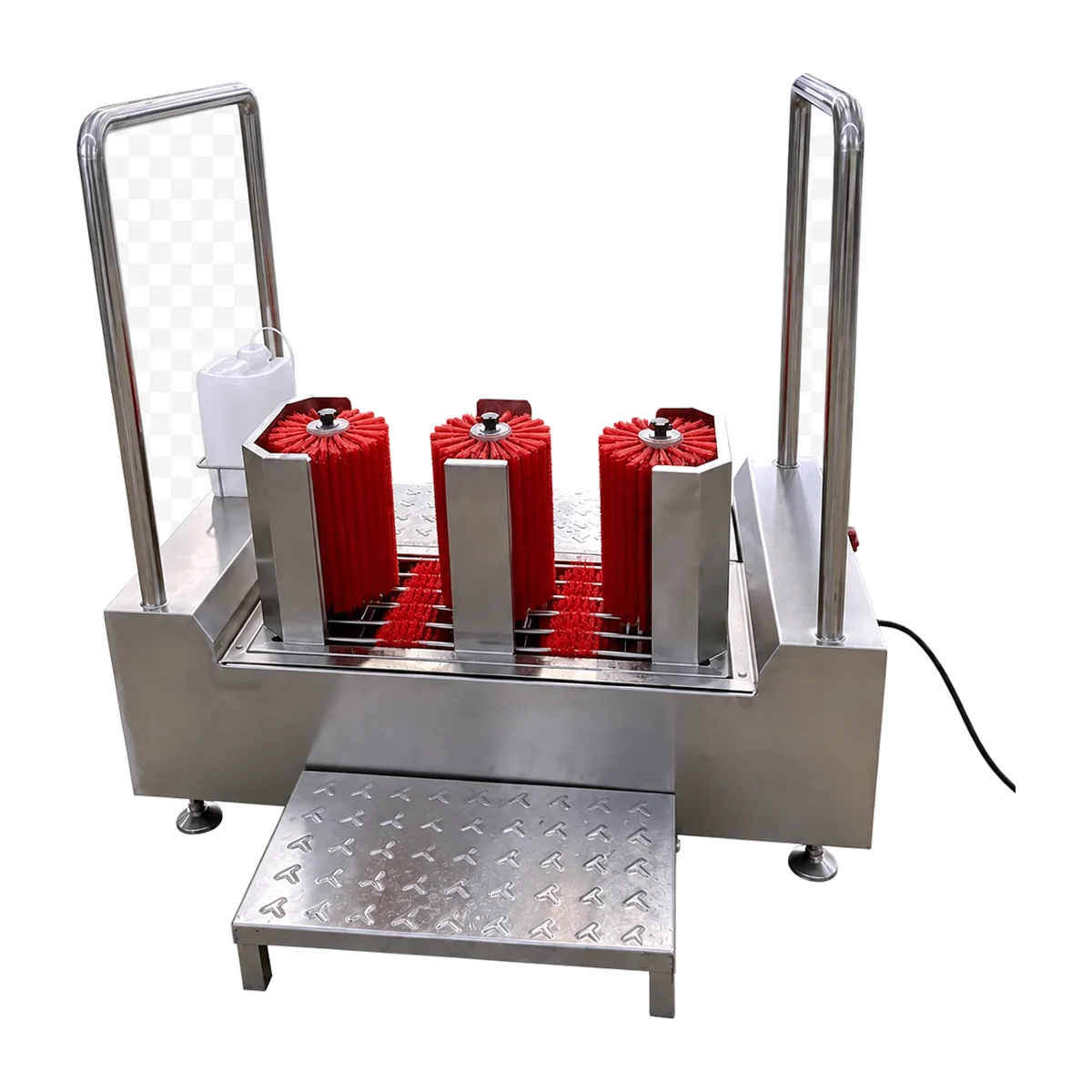
Compact Boot Sole & Upper Washing Machine
VJS-XXJ-002
Compact automatic brush-cleaning option when both boot soles and upper surfaces need mechanical contact.
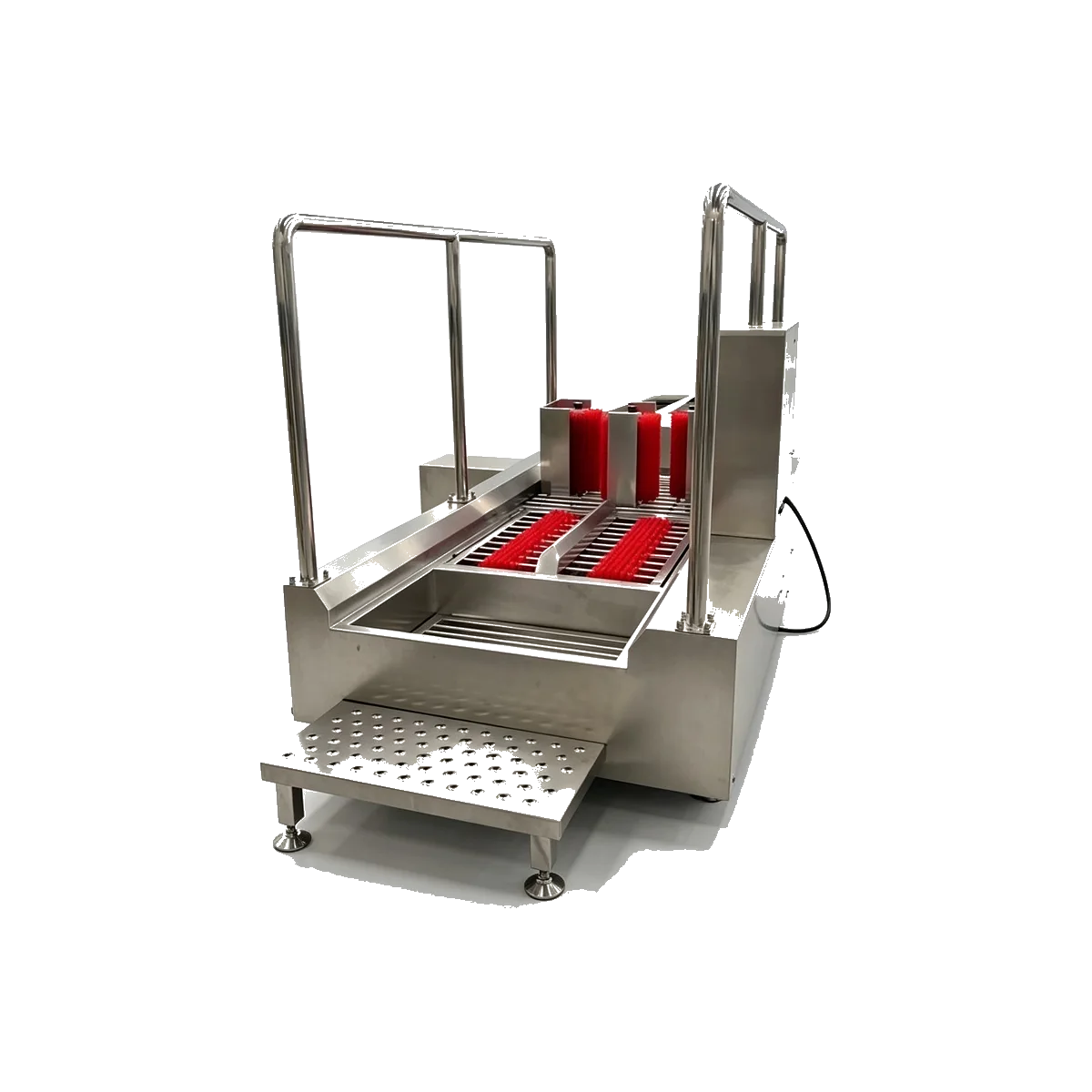
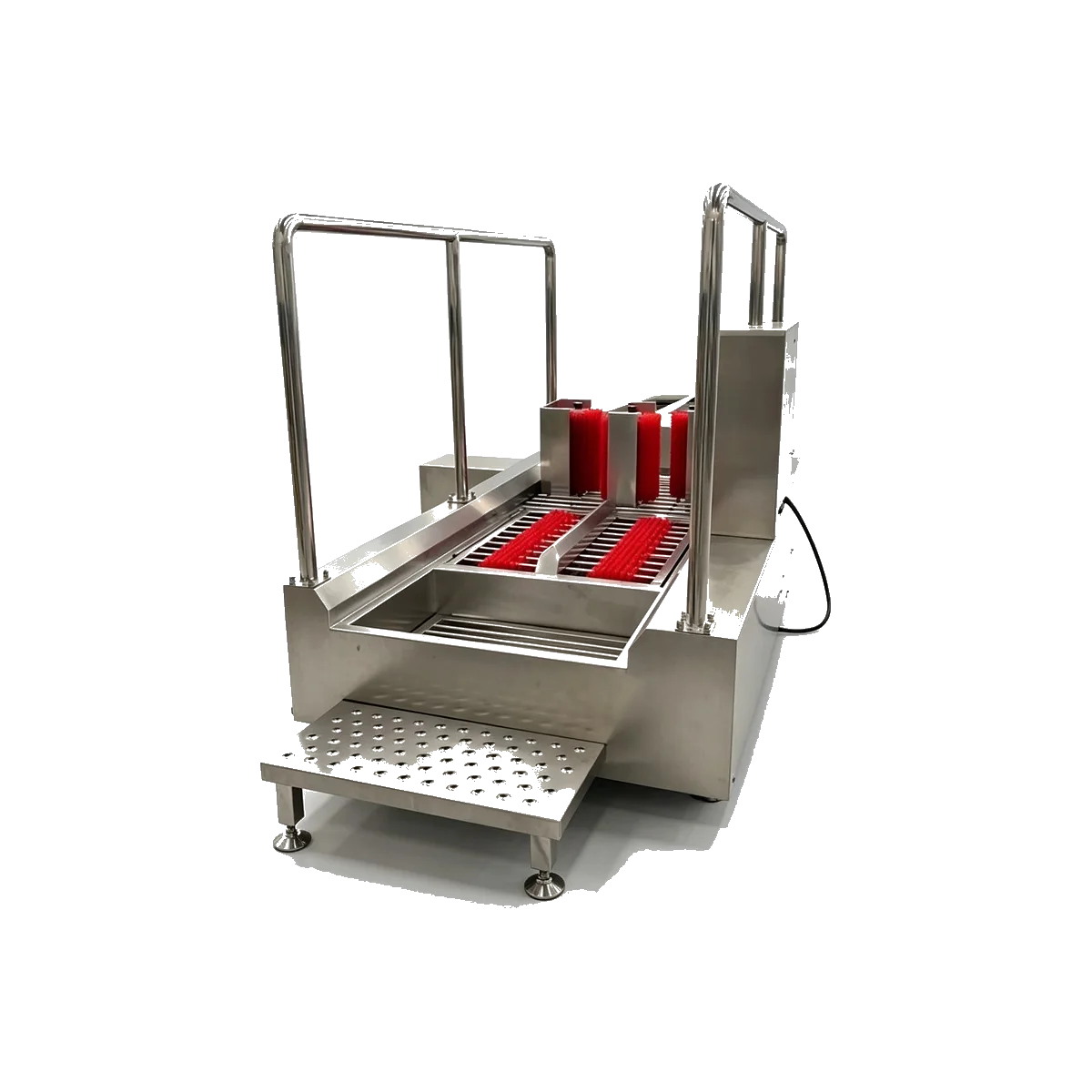
Channel-Type Boot Washer with Disinfection Pool
VJS-XXJ-003
Longer walk-through cleaning route with sole/upper brushing and an integrated disinfection-basin section.
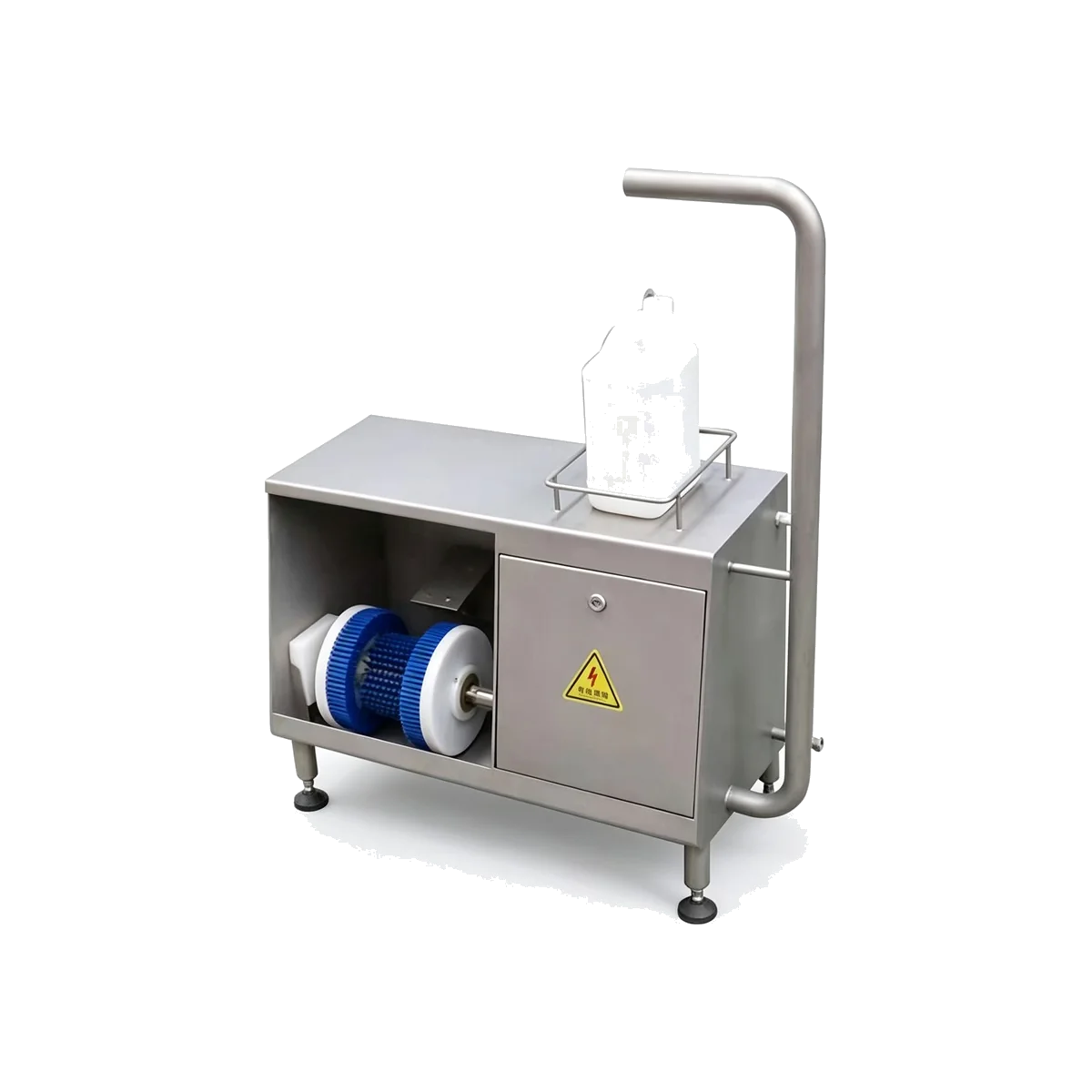
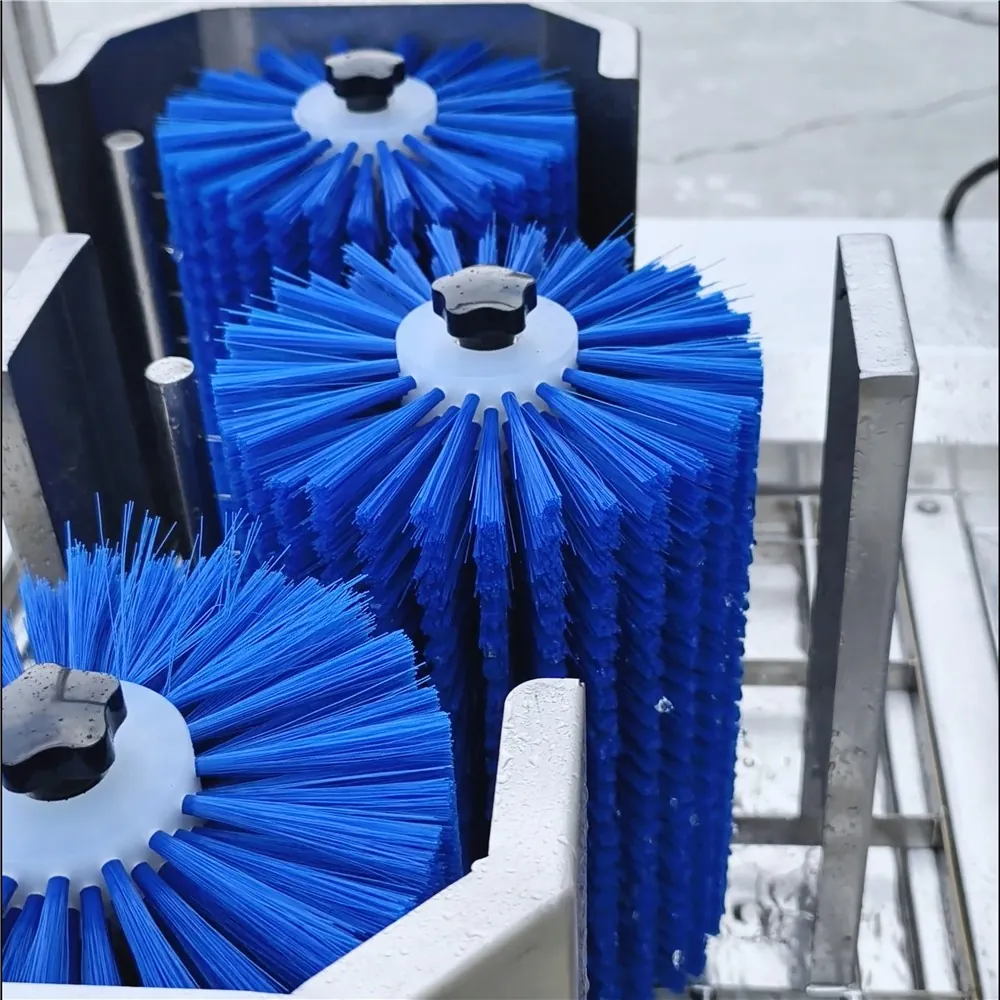
Simple Boot Washer - Blue Roller Type
VJS-XXJ-015
Smaller-footprint boot-sole cleaning option for facilities that need a simpler hygiene point.
Match the Washer to the Soil — Not Just the Boot Size
Light dust, wet organic residue and visibly soiled boots do not create the same cleaning challenge. A useful selection starts with the type and amount of soil, then looks at footwear shape, number of users, available space and whether disinfection is part of the factory procedure.
What We Need From You
Send photos of the footwear, describe what usually sticks to the soles or boot uppers, estimate users per shift, and tell us whether the area is wet, dry or heavily washed down.
Best-Fit Factories & Customer Teams
Factories: Slaughterhouses • Meat & Poultry Processing • Seafood Plants • Vegetable / Produce Processing • Dairy Plants • Wet Food-Processing Areas
Typical contacts: Hygiene / Sanitation Managers • QA Managers • Plant Engineers • Production Supervisors • Equipment Distributors
Frequently Asked Questions
Can one boot washer handle every footwear type?
Not always. Sole pattern, boot height and the amount of soil can affect which brush configuration is more suitable.
Do we always need boot-upper brushes?
No. Some sites mainly need sole cleaning. Upper brushing is useful when contamination reaches the sides or upper boot surface.
Is a disinfection basin always required?
No. It depends on the factory hygiene procedure. Some plants use mechanical cleaning only, while others add a separate disinfection step.
How often do brushes need maintenance?
Maintenance depends on use, soil load and cleaning frequency. Brushes and the wash area should be inspected and cleaned as part of routine hygiene maintenance.
Can dimensions and voltage be customized?
For many models, dimensions, voltage and configuration can be adjusted according to project requirements.
Show Us the Footwear and the Dirt You Need to Remove
A few photos of the boots, sole pattern and current entrance usually tell us more than a generic equipment request. We can then suggest a more suitable cleaning structure.