
High-Throughput Hygiene During Shift Changes
High-Throughput Hygiene During Shift Changes
Designed for factories where dozens or hundreds of employees enter production areas within a short shift-change window. The goal is to keep hygiene steps clear without turning the entrance into a bottleneck.
High-Volume Entry
Meat, Poultry & Seafood
Multi-Station Hygiene
One-Way Personnel Flow
Solution Overview
Average daily headcount is not the key number. The difficult moment is often the busiest 10–20 minutes before a shift starts. If too few washing positions or a slow single-file process is used, queues grow quickly and employees are more likely to rush the hygiene sequence.
The Real Bottlenecks
What goes wrong during peak shift entry
- Too many people arrive at the same time: the entrance has enough capacity most of the day, but not during shift change.
- Too few hand-washing positions: employees queue before they even reach boot hygiene.
- Boot-cleaning cycle is slower than personnel flow: one narrow cleaning lane becomes the limiting step.
- Changing-room traffic and hygiene traffic overlap: people cross each other and the queue becomes disorganized.
- Employees begin skipping steps when the queue grows: a process that looks good on paper becomes difficult to execute under time pressure.
- Equipment was selected by unit price rather than throughput: several small machines may still create a poor overall flow.
Why Peak Throughput Matters
Production start time is linked to entrance capacity. A hygiene entrance that cannot process the busiest arrival period can delay line start, create crowding and make supervision harder.
Design for the peak window, not the daily average. Personnel flow, number of wash positions and the slowest step in the sequence should be considered together.
Recommended High-Throughput Flow
Parallelize the slow steps and keep people moving in one direction
For large plants, multiple parallel hygiene lanes can be more effective than adding functions to one narrow lane.
Recommended Equipment
Selected for capacity, flow and easier shift-change management
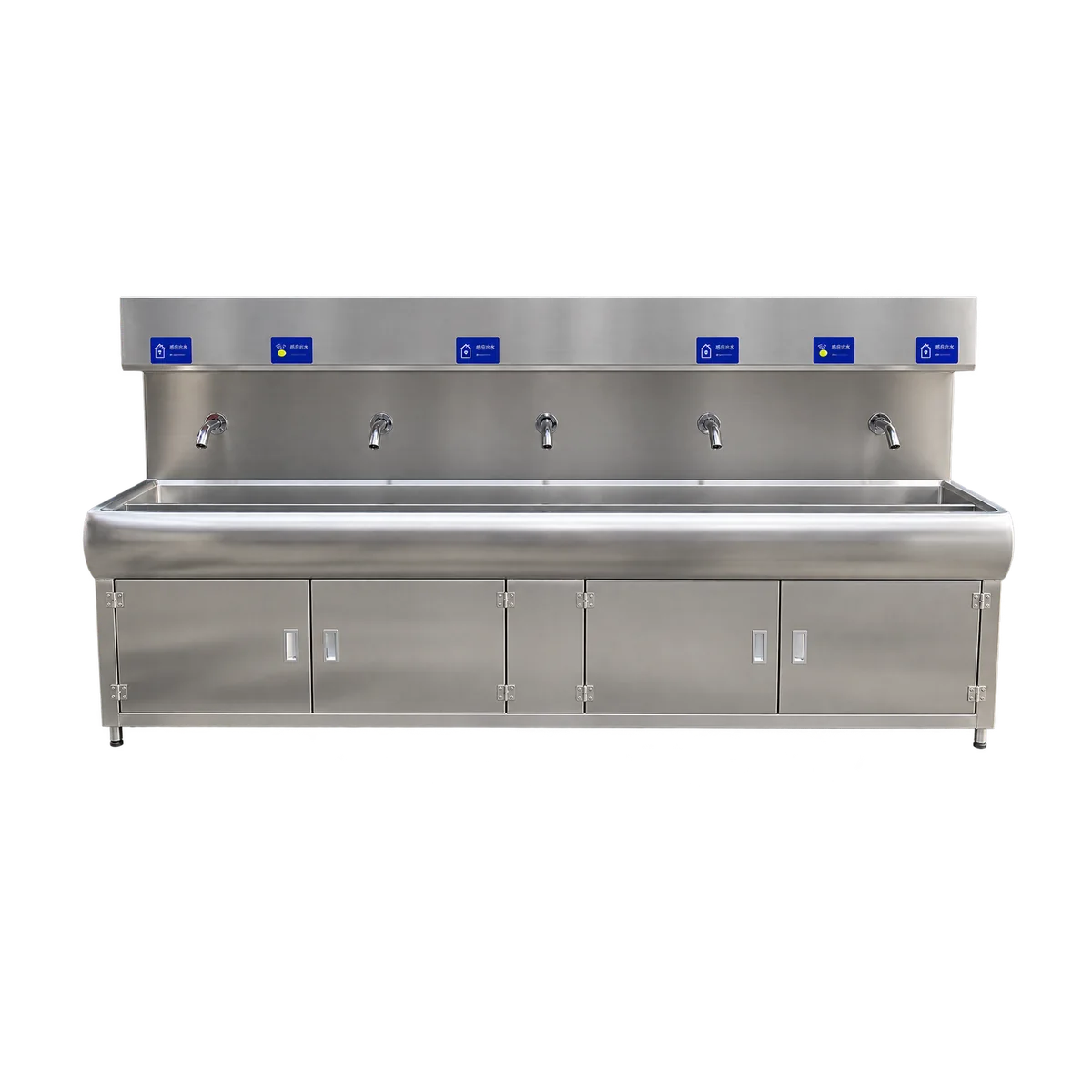
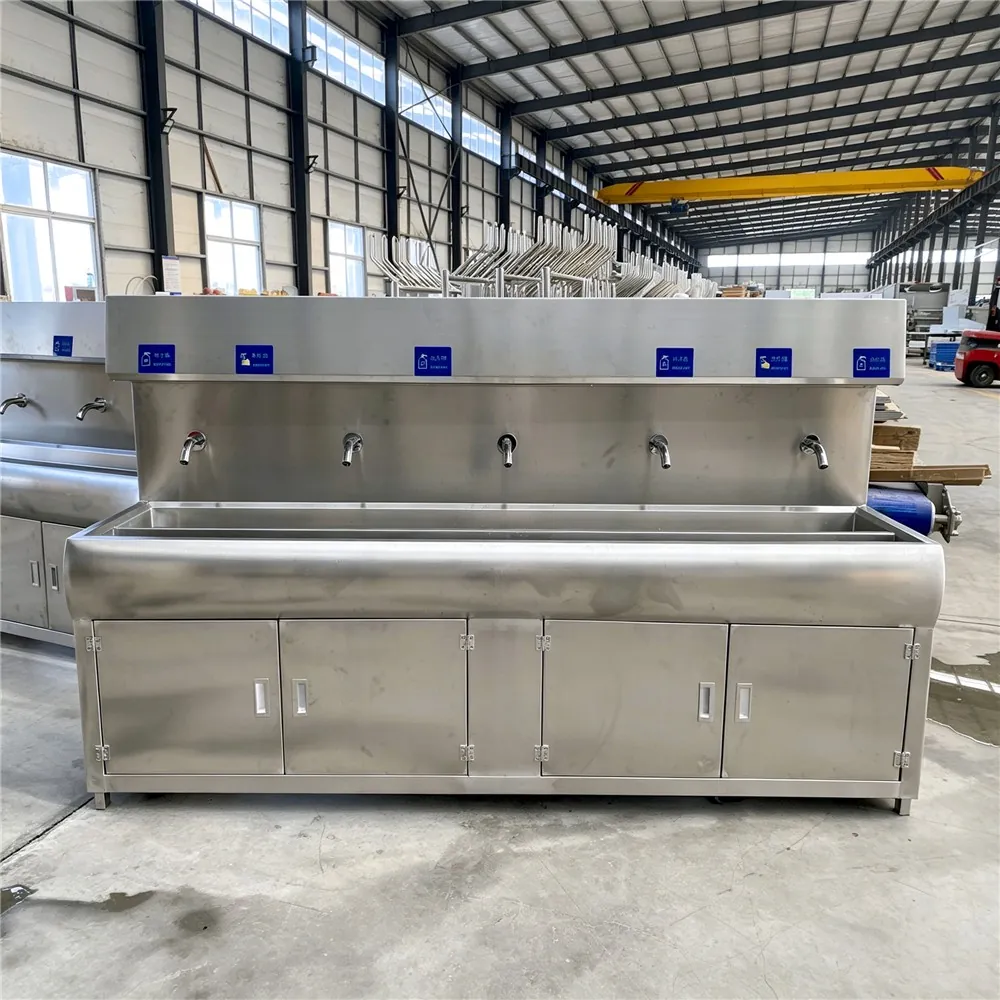
Five-Station Smart Hand-Washing Station
VJS-XSC-002
Five-user hand-washing capacity for facilities that need to process more employees before production entry.
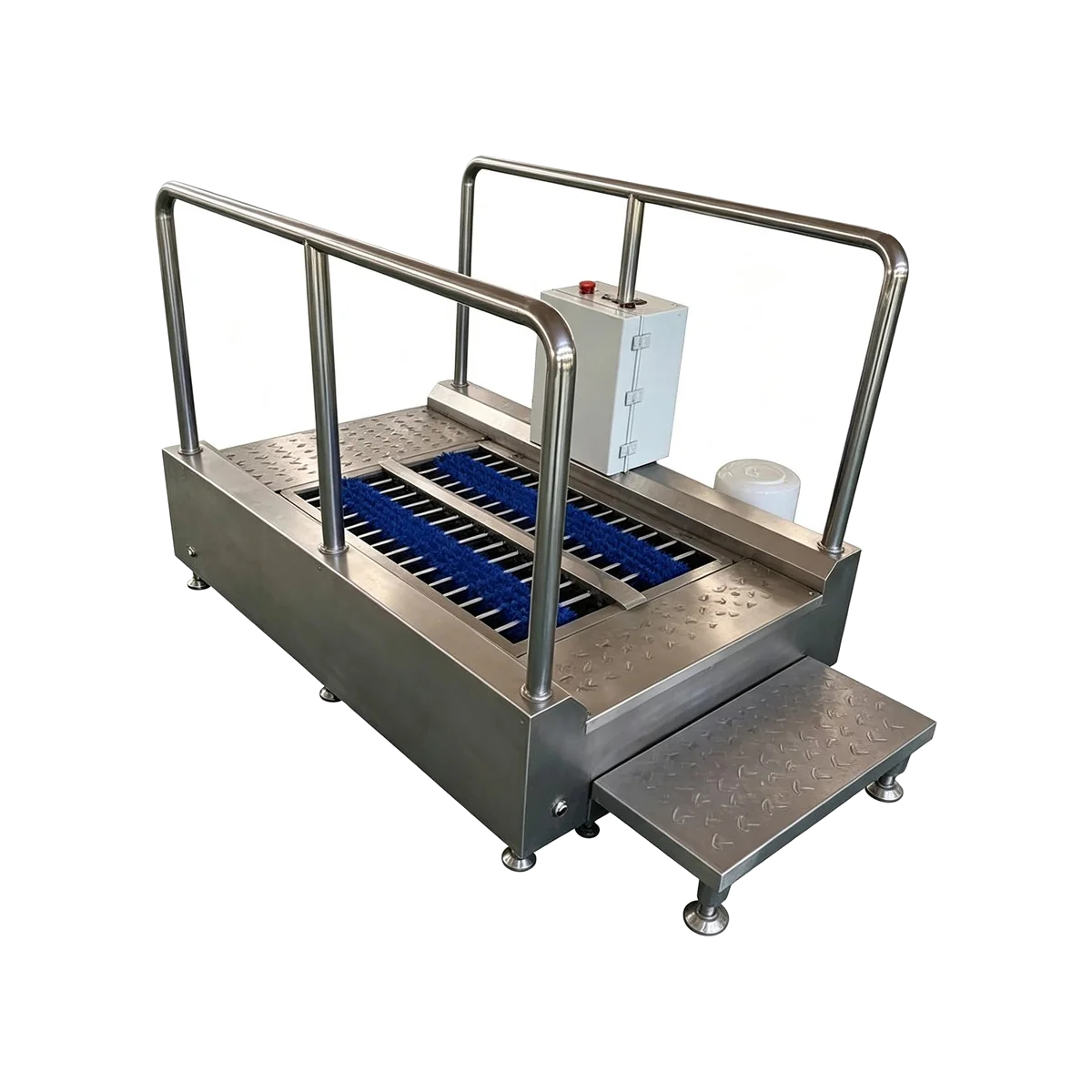
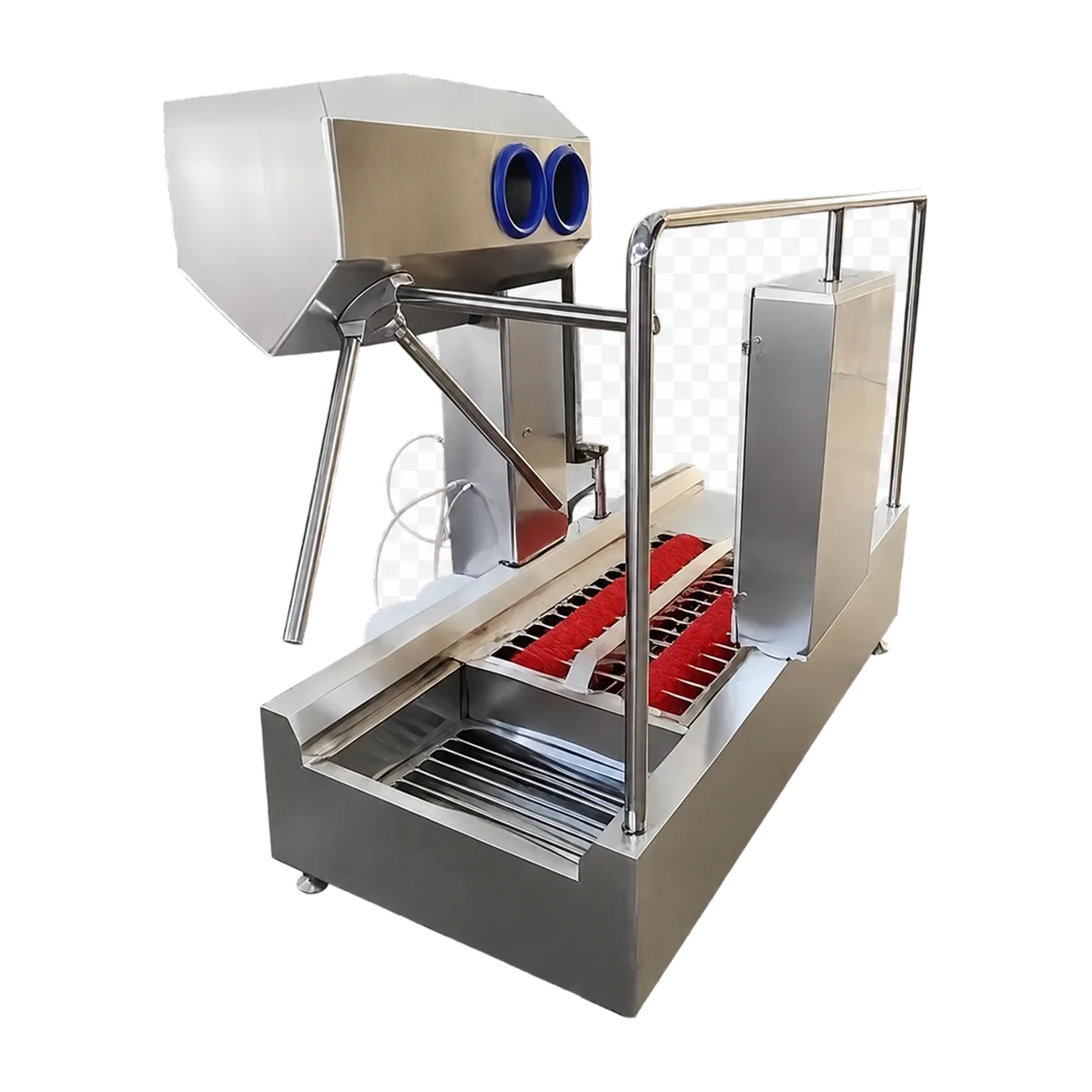
Channel-Type Boot Sole Washing Machine
VJS-XXJ-004
Walk-through sole-cleaning layout suited to continuous personnel movement and higher entry volumes.
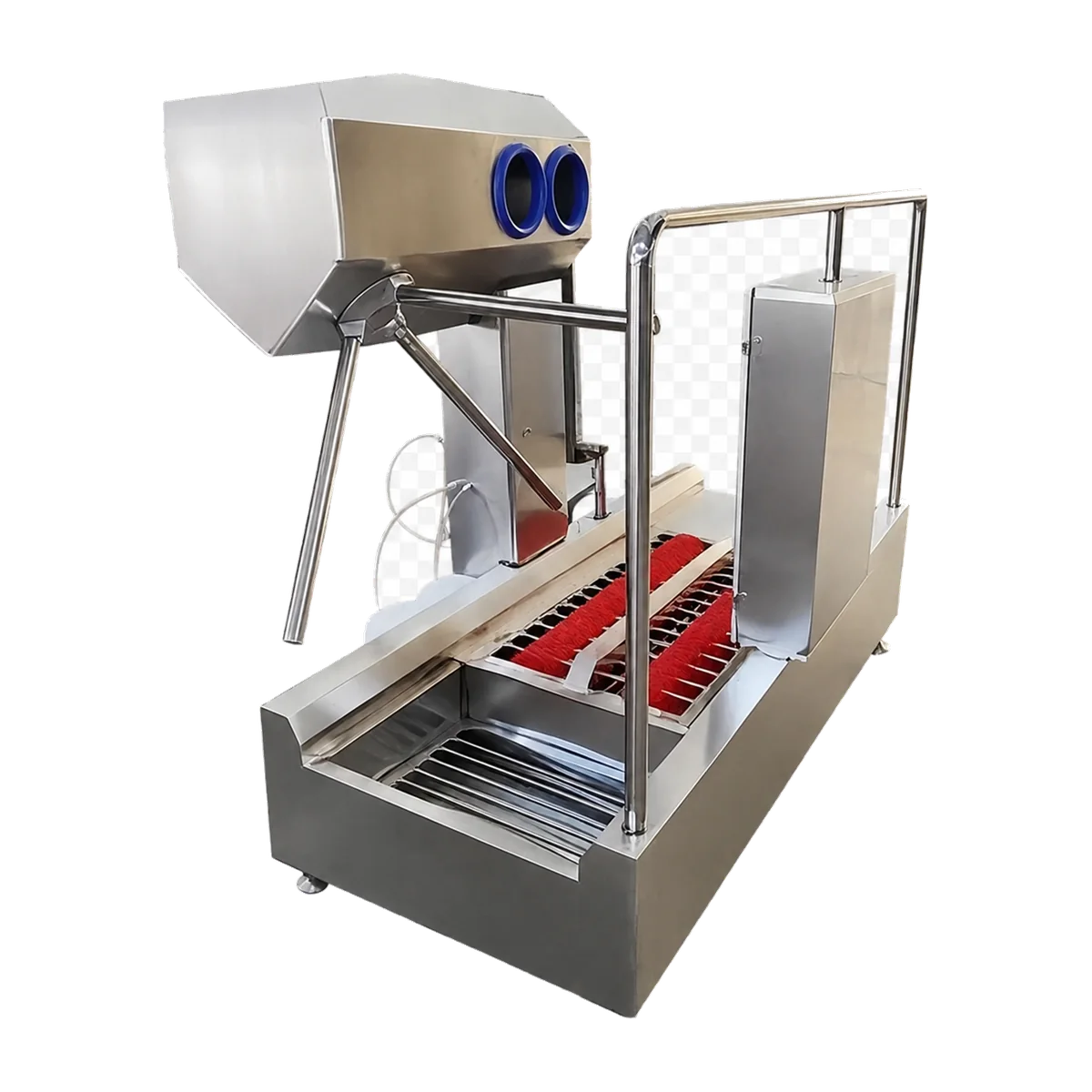
Boot Sole Washing, Hand Washing & Disinfection Access Control Unit
VJS-XXJ-022
Integrated option for plants that want hygiene steps and controlled access combined into one entrance process.
Design Around the Busiest 10 Minutes
A plant with 400 employees may not need equipment for 400 people at once. What matters is how many people reach the entrance during the busiest short period.
We look at: people per peak window, number of shifts, entrance width, one-way or two-way traffic, changing-room layout, required hygiene steps and the slowest process step.
What We Need From You
Tell us your approximate peak entry count, shift times, entrance width, current queue problem and whether hand washing, boot cleaning and access control are all required.
Best-Fit Factories & Decision Makers
Factories: Slaughterhouses • Poultry Processing • Meat Processing • Seafood Processing • Large Central Kitchens • Prepared-Food Plants
Typical contacts: Plant Managers • Hygiene / QA Managers • Production Managers • Engineering Managers • Procurement Teams
Frequently Asked Questions
How many washing positions do we need?
It depends on how many people arrive during the peak period and how long each hygiene step takes. We recommend sizing the entrance around peak flow rather than total daily headcount.
Is one integrated machine always better than several separate units?
No. For high throughput, parallel stations can sometimes move people faster than one multifunction lane. The best layout depends on space and required hygiene steps.
Can the system support one-way personnel flow?
Yes. The equipment arrangement can be planned around a one-way dirty-to-clean route when the site layout allows it.
Do we have to add access control?
No. Access control is optional and should only be used when it matches the factory management process.
Can existing changing-room entrances be upgraded?
Yes. Existing width, doors, drains, utilities and traffic direction can be considered in a retrofit layout.
Shift Changes Should Not Become Hygiene Bottlenecks
Send us your peak personnel count, entrance dimensions and current hygiene sequence. We can help you compare single-lane, parallel-lane and multi-station configurations.